What determines the cost of custom VR training?
A custom VR training budget depends on what the learner must practise and how the exercise will be delivered. An equipment demonstration, a branching emergency scenario and a vehicle-search assessment require different amounts of design, development and testing.
Start with one exercise you can describe and assess. That gives a development team enough information to estimate a pilot and explain the cost of expanding it.
Define the exercise before asking for a price
Write down who the learners are, what they already know and what they should be able to do after training. Then describe the task they will practise: inspect a vehicle, operate a piece of equipment or decide how to respond to an incident.
Specify what the learner can do and what happens when they make a mistake. A simulation with a fixed sequence is a different project from one with several valid approaches, changing conditions and a facilitator controlling events.
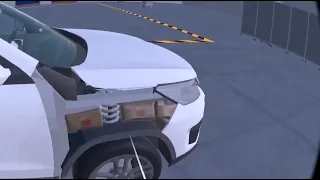
For example, VRG’s UNODC vehicle-search simulation includes cars, trucks and shipping containers, with contraband locations that change between sessions. Those are separate environment and exercise requirements to account for in a brief.
The main items in a development budget
| Budget item | What to specify |
|---|---|
| Training design | Procedures, learning objectives, feedback and subject-specialist review |
| Environments and equipment | Number of locations, vehicles and objects; the reference material available |
| Interactions | What learners inspect, move or operate, and how the simulation responds |
| Scenario variation | Alternative decisions, changing conditions, repeat attempts and facilitator controls |
| Assessment | Tasks to record, scoring rules, trainer reports and any learning-system integration |
| Delivery | Headset or desktop hardware, languages, installation, updates and support |
An existing 3D model can be useful reference material, but ask whether it is ready for interactive training. Visual detail, interaction points and performance on the intended device all need checking.
Decide whether VR is the right delivery format
VR is worth considering when the exercise depends on spatial awareness, inspecting a surrounding environment or interacting with equipment. The delivery plan also needs space for learners, device setup and someone responsible for keeping the headsets ready.
A desktop simulation may suit procedural decisions and searches when learners already have access to laptops. Compare both options against the same learning objective. The appropriate choice depends on how the exercise works and where people will use it.
VRG develops both formats as part of its custom training simulation service.
Separate the pilot from the rollout
A useful pilot gives representative learners a complete, limited exercise. It should let your trainers judge the instructions, interactions and feedback before you commission more scenarios.
Put the scope boundaries in writing. If the pilot includes one environment and one language, make that explicit. List proposed additions separately so they can be priced without confusing the initial commitment.
An example pilot brief
The following is an illustrative scope to adapt with a supplier, not a priced package or a description of a particular client contract:
| Decision | Example boundary |
|---|---|
| Learners | One nominated job role, with representative learners available for testing |
| Exercise | One complete inspection scenario in one environment |
| Device | One agreed headset model or desktop configuration |
| Language | One approved language, with translations priced separately |
| Feedback | Completion status and feedback against an approved checklist |
| Reviews | Two consolidated content-review rounds and a separate acceptance test |
| Handover | Installation instructions, facilitator notes and an agreed support period |
| Exclusions | Hardware purchases, further locations, LMS integration and additional languages unless explicitly included |
Ask the supplier to schedule work against content approval, a usable first build, learner testing and acceptance. A delivery date should follow review of the procedure, reference material and integration requirements; it should not be inferred from the word “pilot”.
Our refinery emergency-training demo combines equipment interaction with communication between a trainee and a facilitator. It illustrates why the brief needs to cover the trainer’s role as well as what the learner sees inside the headset. It is a demonstration, not evidence of a measured improvement in workplace safety.
Budget for operating the training
Ask for development and operating costs to be shown separately. Depending on the delivery model, ongoing costs may include devices, replacements, management software, hosting, software licences, technical support and content updates.
Procedures change. Decide who approves changes to an exercise and whether you need a support agreement or will commission updates individually. Also establish who owns the source files and what access your organisation receives at handover.
For multiple sites, use our guide to scaling a VR training programme to plan facilitator capacity, device turnover, languages and version control before purchasing more headsets.
Compare proposals on the same scope
A lower total can reflect a smaller scope. Check whether each proposal includes the same scenarios, assessment, hardware assumptions, review rounds and support period.
Ask each supplier to identify what could change the estimate. Missing site references, an untested learning-system integration or unsettled assessment rules should be visible before you commit.
Agree how the pilot will be accepted. Useful checks include whether the exercise follows your approved procedure, works on the chosen devices and provides the information your trainers need. Claims about learning outcomes need a separate evaluation with learners.
Choose a commercial structure that fits the work
A defined pilot usually suits a fixed fee with clear acceptance criteria: the scenario, devices, language, assessment and review rounds are agreed before development. If a technical dependency is uncertain, use an hourly or daily investigation with a spending cap to resolve it first.
For a continuing training programme, a monthly retainer can cover agreed development capacity, maintenance and responsibilities. Keep new scenarios, device purchases and third-party licence costs visible so the operating budget is understandable.
There is no single price for all custom VR training. A useful quotation states its assumptions and exclusions. VRG scopes each project around the exercise and rollout requirements rather than publishing a range that combines unlike projects.
Bring a short brief to the first call
Prepare the procedure you want to teach, the learner group, the delivery setting, available devices and your desired timing. Reference photos or existing training material help explain the environment. Include an indicative budget if you have one so the proposed scope is practical.
Discuss a VR training pilot with VRG. We can work through one scenario and identify what needs to be defined before preparing a quotation.