How We Built an AI Chatbot That Replaces Contact Forms
How We Built an AI Chatbot That Replaces Contact Forms
Contact forms are a dead end. Visitors fill them out, wait for a response, and most never hear back quickly enough. The conversion rate on a typical B2B contact form is around 2-3%. The rest of those visitors leave and never come back.
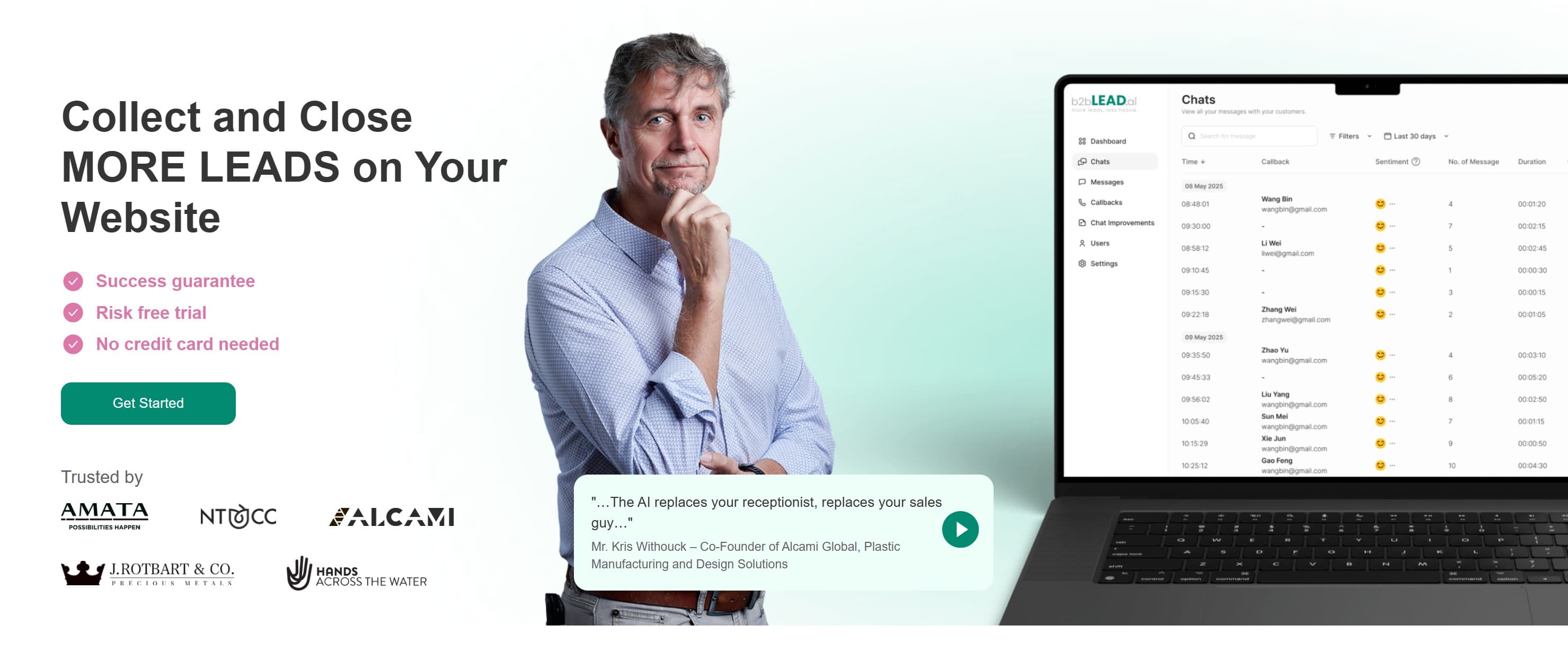
When we set out to build b2blead.ai, the goal was specific: replace static contact forms with an AI conversational layer that engages visitors instantly, answers their questions using the company's own content, and qualifies leads before a human ever gets involved.
This post covers the technical approach we took and the decisions that shaped the final product.
The Problem
B2B companies invest heavily in driving traffic to their websites. But when a visitor arrives with a question, they encounter a form that says "We'll get back to you within 24-48 hours." By then, the visitor has already contacted three competitors.
The gap between visitor intent and business response creates a massive leak in the sales funnel. AI can close that gap.
Architecture Decisions
We built b2blead.ai as a multi-tenant SaaS platform — not a one-off chatbot. This meant designing for hundreds of concurrent deployments, each with their own knowledge base, branding, and integrations.
Knowledge Retrieval with RAG
The core of the system is retrieval-augmented generation (RAG). For each client, we:
- Ingest their website content — pages, blog posts, documentation, product descriptions
- Chunk and embed the text into a vector database
- At query time, retrieve the most relevant passages based on the visitor's question
- Generate a response grounded in the client's actual content, not generic LLM knowledge
This means the chatbot gives accurate, company-specific answers rather than hallucinated general information. When a visitor asks "Do you offer same-day delivery in Bangkok?", the system finds the relevant shipping policy page and responds with the actual answer.
Conversation Flow and Lead Qualification
The system does not just answer questions — it qualifies intent. Through natural dialogue, the chatbot assesses:
- What the visitor is looking for
- Their company size and industry
- Their timeline and budget signals
- Whether they match the client's ideal customer profile
When a visitor matches qualification criteria, the system captures their contact details within the conversation flow and routes the lead to the client's CRM with full chat context attached.
Multi-Tenant Infrastructure
Each client gets an isolated knowledge base and configuration, but shares the underlying infrastructure:
- AWS deployment with auto-scaling to handle traffic spikes
- Sub-second response times — critical for conversational AI that needs to feel instant
- Configurable data retention for GDPR compliance
- Webhook integrations for CRM systems (HubSpot, Salesforce, custom)
Analytics and Insights
We built analytics dashboards that go beyond basic chat metrics. Clients can see:
- What topics visitors ask about most frequently
- Where in the conversation visitors drop off
- Lead quality distribution over time
- Conversion rates compared to their previous contact form
This data helps clients refine their website content, product messaging, and sales approach based on what real visitors actually care about.
Technical Stack
- LLM: OpenAI GPT-4o for response generation
- Vector Database: Pinecone for embedding storage and retrieval
- Backend: Node.js with TypeScript
- Frontend Widget: Embeddable JavaScript, works on any website
- Infrastructure: AWS (ECS, RDS, ElastiCache, S3)
- Monitoring: Custom dashboards with real-time performance tracking
Lessons Learned
RAG quality depends on content quality. If the client's website has vague, marketing-heavy copy, the chatbot will give vague answers. We now include a content audit as part of onboarding to flag gaps.
Speed matters more than eloquence. Visitors expect near-instant responses. We optimized for latency over verbosity — short, direct answers outperform long paragraphs in a chat interface.
Human handoff is essential. No matter how good the AI is, some conversations need a human. We built escalation triggers that detect when a visitor is frustrated, confused, or asking about something outside the knowledge base.
Results
b2blead.ai is now running across multiple client deployments, handling thousands of conversations per month. The platform demonstrates that conversational AI is not just a novelty — it is a practical replacement for broken lead capture workflows.
For companies interested in building similar AI-powered systems, we offer custom development services. Whether you need a standalone chatbot, a full SaaS platform, or AI features integrated into an existing product, we can scope and build it.
See the full b2blead.ai case study or book a call to discuss your project.