Agentic AI for Enterprise: What It Is and When to Use It
Agentic AI for Enterprise: What It Is and When to Use It
There is a lot of noise around AI agents right now. Every software vendor is relabeling existing features as "agentic." But behind the hype, agentic AI represents a genuine shift in how software can operate — and it matters for businesses that rely on complex, multi-step workflows.
This post breaks down what agentic AI actually is, where it works well, where it does not, and how to evaluate whether your organization should invest in it.
What Is Agentic AI?
An AI agent is software that can independently reason through a problem, decide what actions to take, use external tools, and adjust its approach based on results — without a human directing every step.
This is different from a chatbot that responds to prompts or a rule-based automation that follows a fixed sequence. An agent operates with a goal, not a script. It can:
- Break a complex request into sub-tasks
- Decide which tools or APIs to call
- Evaluate intermediate results and change course
- Handle exceptions without human intervention
- Chain multiple steps together to reach an outcome
For example, an agentic system tasked with qualifying a sales lead might: search the company's CRM, pull recent email history, cross-reference with LinkedIn data, check for open support tickets, assess deal readiness, and draft a summary — all autonomously.
Where Agentic AI Outperforms Traditional Automation
Rule-based automation (like Zapier or traditional RPA) works well for predictable, linear workflows. If the process is the same every time, automation is the right tool.
Agentic AI is better suited for tasks that involve:
- Variability: The inputs change significantly between runs. A support ticket might need CRM lookup, product docs, or escalation to engineering — the agent decides which path.
- Judgment calls: Deciding whether a lead is qualified, whether a document needs legal review, or whether an anomaly in data warrants action.
- Multi-system orchestration: Tasks that span multiple tools, databases, and APIs where the sequence is not always the same.
- Natural language interaction: Processing unstructured text — emails, reports, chat messages — where meaning must be interpreted, not just matched.
Where Agentic AI Is Not the Right Fit
Not every workflow needs an AI agent. We actively advise clients against agentic solutions when:
- The process is fully deterministic and consistent — traditional automation will be cheaper and more reliable.
- Latency is critical — agents that reason through steps will always be slower than hard-coded logic.
- The stakes of an error are very high and there is no human review step — AI agents can make mistakes, and those mistakes need to be caught.
- The data is too sensitive for LLM processing, even with private deployments.
Honest scoping saves time and money. We have talked clients out of agentic AI and into simpler solutions when that was the right call.
How to Evaluate Readiness
Before committing to an AI agent project, consider these practical questions:
1. Is the workflow documented? AI agents need clear goals and access to the right tools. If your team cannot describe the process, an agent cannot execute it. Start by mapping the workflow.
2. Are the data sources accessible via API? Agents interact with systems through APIs, webhooks, and database connections. If critical data is locked in spreadsheets or legacy systems without integrations, you will need to solve that first.
3. What does "good enough" look like? AI agents will not achieve perfection. Define an acceptable accuracy threshold. For lead qualification, 85% accuracy with human review on edge cases is often sufficient to deliver value.
4. Who will monitor the system? Autonomous does not mean unmonitored. Plan for logging, alerting, and periodic review of agent decisions. The best agentic deployments include dashboards that surface what the agent did and why.
What We Build at VRG
We develop custom agentic AI systems for enterprise clients. Recent projects include:
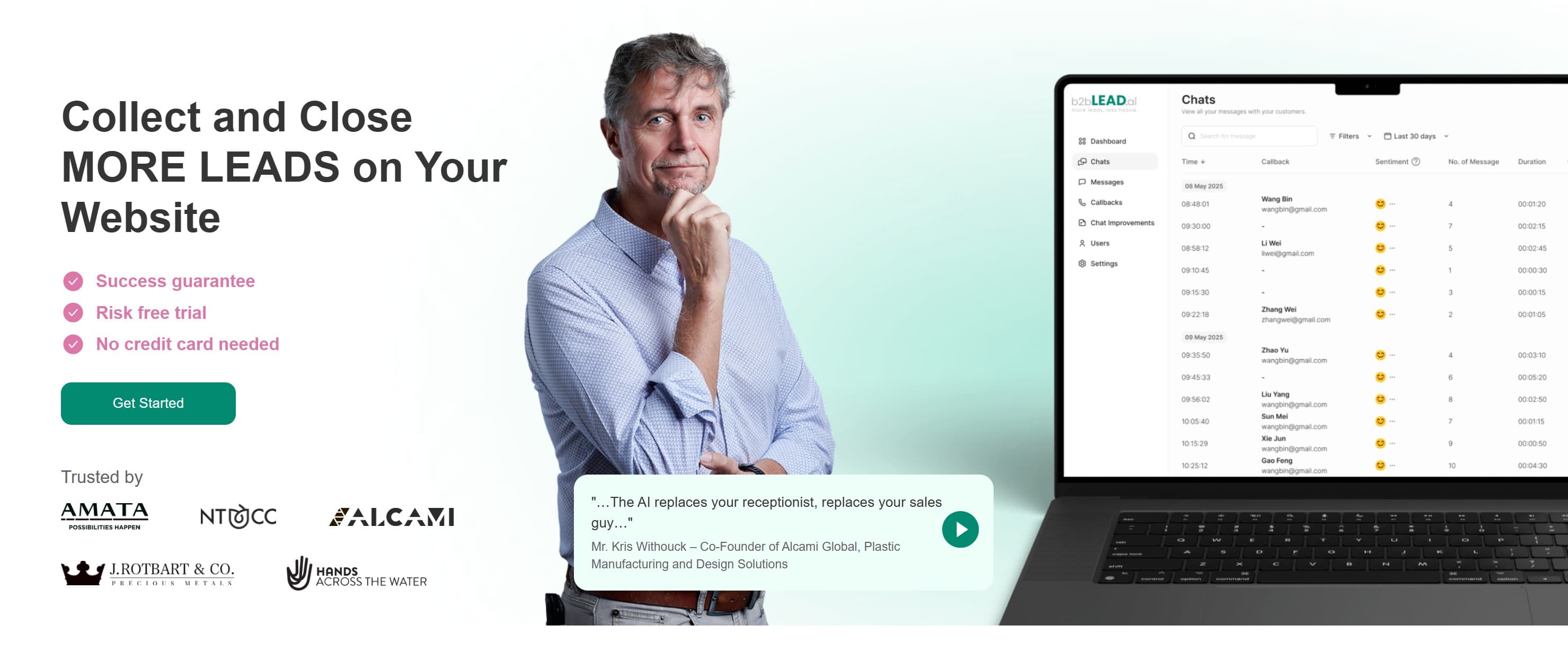
- AI-powered lead qualification — autonomous agents that ingest website content, engage visitors in real-time conversation, assess intent, and route qualified leads to CRM systems. See our b2blead.ai case study.
- Multi-agent workflow orchestration — systems where specialized agents collaborate on complex tasks, each handling a specific domain (data retrieval, analysis, reporting).
- Internal knowledge assistants — agents that connect to company documentation, Slack history, and project management tools to answer employee questions instantly.
Our approach is practical: we start with a scoped proof-of-concept using real data, validate the approach with measurable outcomes, and then build for production with proper architecture, security, and monitoring.
Getting Started
If you are evaluating agentic AI for your business, we offer a free 30-minute scoping call. We will give you an honest assessment of where AI agents can add value in your specific workflow — and where simpler solutions might be a better fit.
Book a call with our team to discuss your project.