UNODC: Vessel crime-scene investigation
The United Nations Office on Drugs and Crime (UNODC) commissioned VRG to build a 3D simulation for officers investigating vessels suspected of migrant smuggling. Developed in collaboration with the Regional Support Office of the Bali Process, the exercise places trainees aboard a fishing vessel to practise searching, selecting evidence and explaining their decisions.
Physical training on seized vessels is expensive, hazardous and difficult to arrange. The simulation gives officers a repeatable exercise alongside classroom teaching and case studies.
Searching the vessel
Trainees move through the vessel and its cargo spaces, inspect hidden areas and collect items they consider relevant to an investigation. The environment includes crew quarters, a lower deck and an engine room. Doors, furniture and other objects give the search a physical context, while the confined spaces encourage officers to work through the vessel systematically.
An introductory boarding screen explains the controls. Map navigation helps trainees move between areas, and an evidence bag lets them revisit collected items and consider their significance. The exercise brings legal knowledge and search procedures into a setting where participants have to decide what to examine and what to retain as evidence.
Facilitator-led sessions and debrief
We implemented a client/server system that allows the training facilitator to monitor trainee evidence selections. This gives the instructor a basis for discussing how participants approached the search and why they selected particular objects.
The classroom discussion can examine evidence collected, evidence overlooked and areas that received too little attention. The same vessel supports repeated practice and comparison of different approaches to the investigation.
Delivery on standard laptops
We optimised the simulation for low-powered laptops so it could reach training locations across Southeast Asia where supplying large numbers of VR headsets was not feasible. Participants use a desktop 3D application, with a server supporting the facilitator's view of the exercise. It has been used by law enforcement agencies in multiple countries, including at remote training facilities.
The original architecture set out separate participant and facilitator applications, with session management and remote client updates to support classroom delivery.
Training in Penang
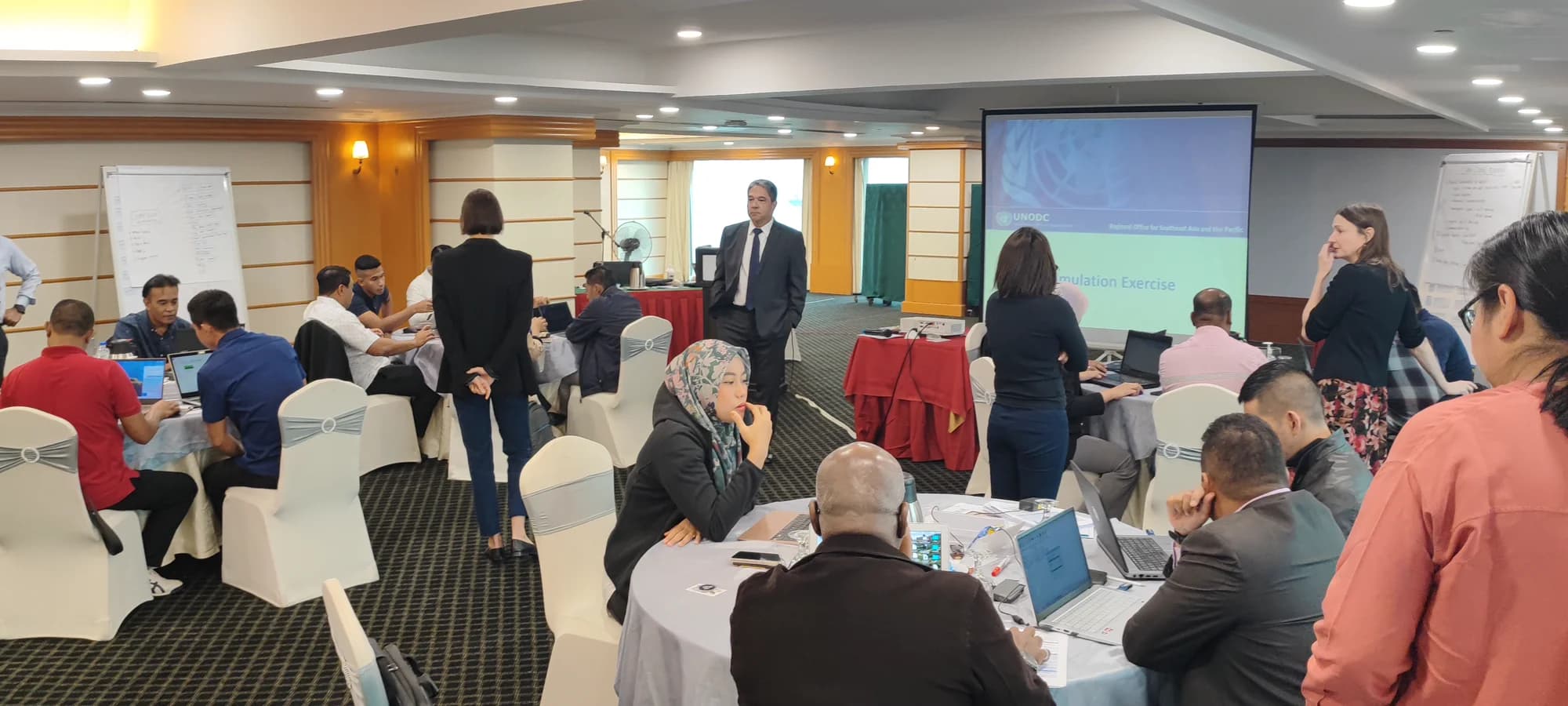
James attended a training session in Penang in February 2023, where participants worked through the vessel-search exercise on laptops. The video above and this photograph show the simulation in use around the classroom tables.
Development with the training team
The project began with a proposal and procurement process in 2021, followed by development, classroom review and revisions during 2022. UNODC supplied subject expertise and evidence material. Feedback covered navigation through the engine room, the size and visibility of collected objects, the boarding instructions and the ease of reviewing evidence.
The reviews focused on making items easier to inspect and the exercise easier for instructors to run, so officers could concentrate on the investigation.
Project details
| Detail | Information |
|---|---|
| Client | United Nations Office on Drugs and Crime (UNODC) |
| Collaboration | Regional Support Office of the Bali Process |
| Platform | PC / laptop, optimised for low-spec hardware |
| Use case | Law enforcement, crime-scene investigation and anti-smuggling training |
| Environment | Fishing vessel |
| Classroom tools | Map navigation, evidence collection and review, facilitator monitoring |
Planning a similar project?
Explore how we turn procedures and workplace situations into practical training experiences.