Synk: AI role-play for difficult conversations
Synk gives people a place to practise difficult conversations with AI characters. A learner speaks to a character, responds as the conversation develops and receives feedback afterwards. VRG built the web platform and character engine, working with Synk's founders, Dr James Aloni and Dr Bengianni Halil-Pizzirani, whose experience in human services and research shaped the training approach.
Our work has continued since 2024, covering the learner experience, tools for configuring scenarios and the systems that connect speech, character behaviour and feedback.
Making room for rehearsal
The brief came from a gap in professional training: people learn an approach in a workshop, then have limited opportunities to practise using it under pressure. A conversation with a distressed, resistant or defensive person requires judgement as it unfolds.
Synk's characters have a backstory and behaviour suited to the exercise. They can withdraw, challenge the learner or become more willing to engage as the conversation develops. Learners choose their own words and can repeat the scenario to try another approach.
An early application involved practitioners rehearsing a conversation with a young person using violence in the home. The scenario and feedback were aligned with specialist training, giving participants a way to practise applying what they had learned.
Designing around the uncanny valley
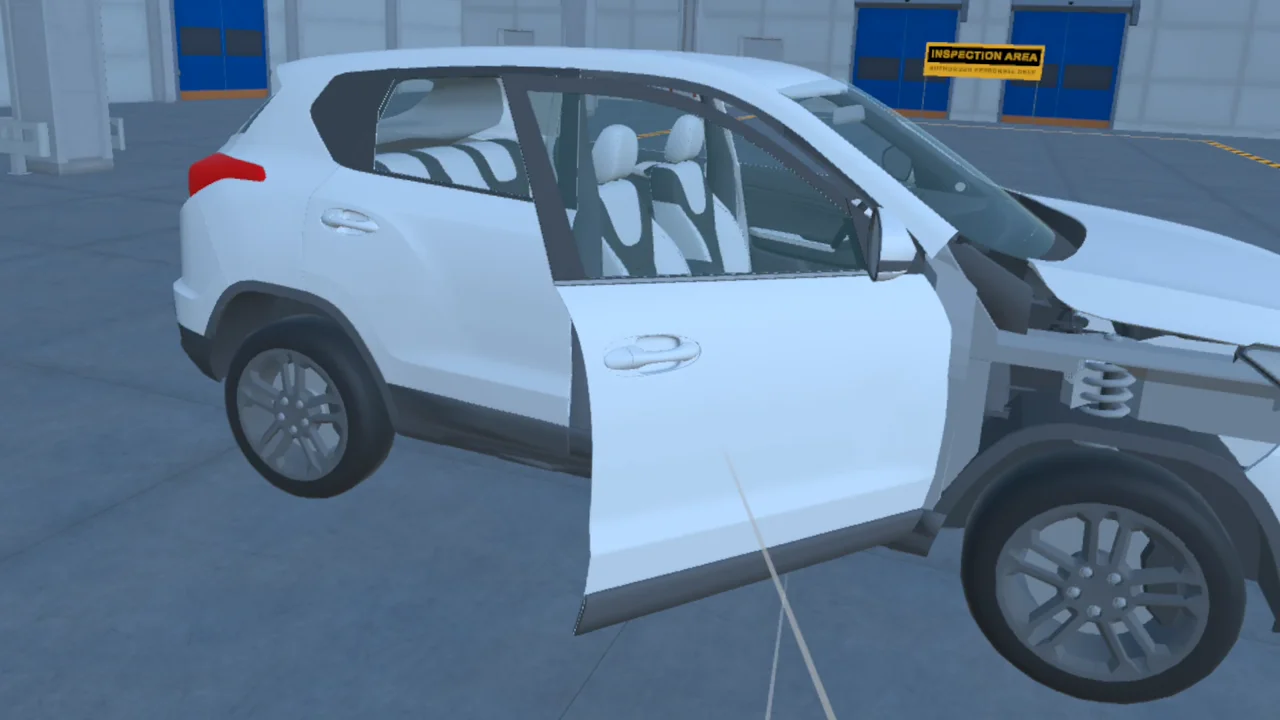
The uncanny valley describes the unease that an almost-human figure can provoke when its appearance or movement feels wrong. For a training character, that distraction can pull attention away from the conversation.
Synk deliberately uses visibly stylised avatars. Its June 2026 presentation sets out the reasoning: the interaction should carry enough emotional realism for meaningful practice, while the character remains recognisably fictional. A learner should be able to take the situation seriously and still know they are rehearsing.
That balance involves more than the character model. In development reviews, the team looked at the character's distance from the camera, apparent age, voice and surroundings. A teenage character framed too closely against an office background gave the wrong impression for the scenario. Those details became part of the review alongside the dialogue itself.
Keeping the conversation usable
Testing exposed a trade-off in the speaking controls. Automatic voice detection sometimes let the character talk over the learner. The team preferred push-to-talk because it made taking turns clearer and gave learners control over when they had finished speaking.
We made the on-screen speaking prompt larger and kept it visible until the learner successfully spoke to the character. We also revised session-ending logic and added configuration controls for testing it. An abrupt exit could be difficult to distinguish from intentional character behaviour, so the ending needed as much attention as the opening.
These changes came from reviewing actual sessions with the training team. They gave us specific behaviour to improve: how a learner starts speaking, how an interruption is handled and how the character brings a conversation to a close.
The platform behind the characters
We developed the portal for managing users, organisations and scenarios, with role-based access, conversation records and usage tracking. Administrators configure the character's background and behaviour around the training exercise.
The early experience used Unity and Convai. Our subsequent work included developing Synk's own character engine, connecting speech recognition, AI responses and voice output with the browser experience. This gave the team more control over how characters respond and how sessions are managed.
After an exercise, the platform generates strengths-based feedback: what the learner did well, where the interaction shifted and what they could practise next. Synk's team supplied the practice frameworks that guide this feedback. Trainers can review use and engagement to support further coaching.
Early use and ongoing development
Synk's June 2026 presentation reported early sector testing involving 16 organisations. It reported 90% agreement that the simulation felt realistic and credible, and 100% agreement that it added value alongside other training. These figures describe reported perceptions of the experience; they do not establish long-term improvements in practice.
Development continues across character behaviour, feedback and the tools used to run training. The silent video above shows a conversation with Rin in a customer-service scene, recorded on 16 September 2026, with the Thai transcript.
Talk to us about building AI characters and conversational training experiences.
Planning a similar project?
Explore how we scope and build AI applications, integrations and the software around them.